We’re a winner in the British HR Awards 2025!

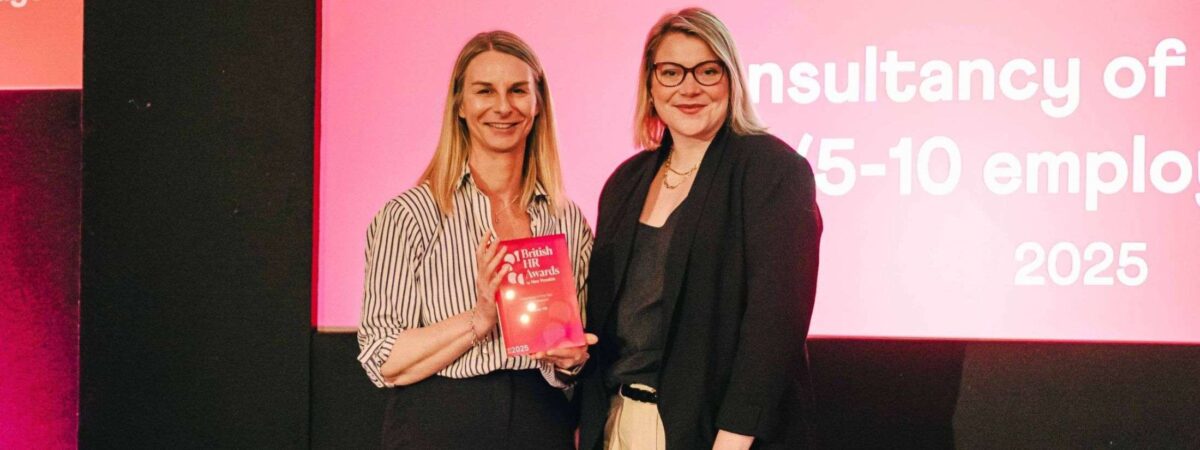
We are delighted to announce that we’ve been named a Winner in the British HR Awards 2025.

The British HR Awards is an annual campaign that sets out to discover and celebrate the teams and individuals who are truly passionate about delivering a world-class people experience.

This year, over 350 entries were received from organisations across the UK, and so competition to be named a Winner proved to be fierce. Firms taking part ranged from start-up innovators to public sector heroes, tech superstars, global titans and everything in between.

Winners were revealed at a special celebration event in Covent Garden, London, hosted by comedian Fiona Allen. A range of categories were awarded, including ‘Culture Initiative of the Year’, ‘Employee Wellness Initiative of the Year’ and ‘Leader of the Year’.

The British HR Awards 2025 Judges include:

  • Louise Benford, Chief People Officer, The AA
  • Sharon Benson, HR & OD Director
  • Anne Billson-Ross, Group HR Director, Taylor Wimpey
  • Kath Ennis, Chief People Officer, Ansor LLP
  • Mary Foulkes OBE FCIPD, Director of Equity, Inclusion and Culture, Shelter
  • Leigh Gannon, Director People & Organisation, PUMA UKI
  • Julie Griggs, Director of People & Partnering, The Open University
  • Maria Hawley, Director of People, Fisher German
  • Melanie Hetherington, Chief People Officer, NatWest Cushon
  • Dr Tracey Leghorn, Chief Business Services Officer, SUEZ recycling and recovery UK
  • Janet Roberts, Chief People & Culture Officer, Cycas Hospitality
  • Tara Ryan, VP of People Experience, Monzo
  • Perry Timms, Chief Energy Officer, People and Transformational HR
  • Lucy Tobin, People Director, Frontier Economics

Claire McLean, CEO at Realise HR said: “We are incredibly proud and honoured to be recognised as HR Consultancy of the Year for the second year running. As a small but mighty team, this award is a testament to the passion, dedication, and impact we bring to every client partnership.”

Nate Harwood, Founder of New Possible and British HR Awards judge said: “The need for an engaged and agile workforce is more urgent than ever, and it’s the outstanding skill, passion, and hard work of HR professionals who are meeting these challenges head-on. The British HR Awards are proud to celebrate these exceptional teams and individuals. Congratulations to all the Winners.”




Generation Alpha

Warning: Get ready to feel old.

Generation Alpha, those born between 2010 and 2024, are now only a few short years away from joining the workforce. Digital natives, Gen Alpha have grown up in a world of smartphones, social media, and instant access to information, in a way that’s shaped not only their digital literacy but also their behaviours, perceptions and views about the world. For Gen Alpha, tech adoption starts early, with studies showing that almost half of children in this demographic own or use a tablet prior to 6 years old. Smartphones? Most children will have a smartphone by the age of 10 – the world at their fingertips.

As a millennial, my first phone was a Siemens C35 (Google it). It was great, I could text, talk and store phone numbers, and while a genuinely solid phone for its time, it did little to connect me outside of my immediate family and friendship group. Likewise, I didn’t get a home computer until I was 10 years old, and even then, it didn’t have the internet (at least, not at first). I distinctly remember using Microsoft Encarta – that’s a disc-based encyclopaedia – to do homework and watch videos of space shuttles, exotic animals, foreign countries and cultures, things that were so far away from little old me in Belle Vue, Carlisle. It really did feel like a marvel, like you were starting to see this thing called ‘the future’.

Fast forward to Gen Alpha and they have all of this at a click; they see more, they hear more, and it directly effects how they interpret and interact with the world. So, as employers brace for their arrival, it’s essential to understand the unique characteristics that define Gen Alpha and how companies can prepare for the changes they will bring.

Beyond their technological expectations, Gen Alpha place tremendous value on purpose and social impact. As Catherine Nobile, PsyD, the Founder and Director of Nobile Psychology states, “In contrast with preceding generations, Gen Alpha has grown up in a time when global issues are highly visible, multiple viewpoints are frequently aired” and as such they have a heightened awareness of globally pertinent topics such as climate change, social justice, and diversity. More than ever before, Gen Alpha will want to work for organisations that align with their values and contribute positively to society, where true thought has been given to embedding items such as sustainability and inclusivity into company culture and working practices.

Get ready for Gen Alpha to also challenge outdated conventions, policies, and things that, if we’re honest, don’t always make sense. If you’ve ever heard yourself, say, “well we’ve always done it this way” expect Gen Alpha to tackle this way of thinking. This doesn’t come from a hostile or confrontational place, but rather, says Dr. Nobile “born from the environment in which they’re growing up – a world that embraces self-expression, celebrates emotional intelligence” and doesn’t accept what’s said as gospel. We’re going to need to be transparent, flexible and practice what we preach.

Finally, Generation Alpha has grown up in a world of instant gratification. Social media platforms provide immediate feedback in the form of likes and comments, and this desire for real-time validation will likely translate into their work environment. They will expect regular feedback on their performance and progress, rather than waiting for annual reviews. For employers, this means adopting a more continuous feedback loop—providing real-time recognition, frequent check-ins, and more immediate performance evaluations.

By scrapping outdated annual review systems and offering timely praise or constructive feedback, organsations can meet the expectations of Gen Alpha. Additionally, integrating platforms that allow for ongoing performance tracking will help managers provide the kind of instant responses that this generation craves.


Return to the Office – The Big Debate

The debate over returning to the office (RTO) has reignited as companies increasingly call their employees back on-site. The post covid narrative around “the new normal”, a mix of highly connected hybrid and remote working, is under scrutiny as employers battle to understand what truly works for their business. A KPMG survey found that 64% of CEOs around the world think everyone will be back in the office by 2026.

This shift has triggered a mix of reactions across industries, with global brands such as Amazon and Spotify taking drastically different positions on what’s best for big ticket items on the People agenda such as productivity and workplace culture.

Amazon’s CEO, Andy Jassy, recently announced that all employees would be required to work from the office full-time starting in January 2025, signalling an end to the hybrid work model that had become common during and post pandemic. The decision, intended to foster collaboration and connectivity, has met significant resistance, with more than 500 employees (10% of Amazon’s workforce) signing a letter urging the company to rethink a mandated RTO. Matt Garman, Chief Executive at Amazon’s Web Services division, told colleagues that “those who don’t work well in that [office] environment and don’t want to, that’s okay, there are other companies around”. However intentioned, Garman’s comments have been heavily criticised, and it’s an interesting take. Garman states that the mandate is about “working together”; Jassy says it’s about creating a culture where “collaborating, brainstorming, and inventing are simpler and more effective”. I get it. I do. But there’s a question around whether culture should be more than what’s trending. Whether it should be so easily influenced by what’s happening in our economy (i.e. who has the most power at the time) or something more evidence-based and removed from social power struggles.

Spotify is aggressively at the other end of the spectrum. Katarina Berg, Spotify’s Chief Human Resources Officer, has said that while she understands why some companies are returning to office, that “you can’t spend a lot of time hiring grown-ups and then treat them like children”. While Spotify acknowledges the challenges of virtual collaboration, Spotify’s attrition rates have been 15% lower than before they implemented their ‘work from anywhere’ policy. Essentially, it’s helping them keep their talent. As the biggest music streaming platform in the world, it’s decided to let people choose their own working location…but interestingly is also retaining its office footprint. The company hosts music sessions with popular artists and schedules core weeks to bring staff together for strategy discussions, allowing employees to experience the benefits of in-office collaboration without enforcing it. Berg recognises that, “it’s different to being on a screen… We know what happens when people sit down, and you can actually look each other in the eye.”


So, what’s the answer? Mandates might backfire. Flexing your muscles is rarely received well and what’s worse, RTO mandates can be seen as a way to downsize the workforce via back-channel layoffs. Software company, Bamboo HR, found that a quarter of VP and C-Suite executives in their research admitted that they hoped their mandates would increase voluntary turnover.

Whatever you decide, clear communication, an openness to feedback, and a willingness to compromise are essential. By fostering a dialogue, companies can better understand how RTO policies impact employees’ lives, work-life balance, and financial well-being. Companies that respect employees’ autonomy and embrace flexible models are more likely to build lasting trust and retain talent. As the workplace continues to evolve, organisations that prioritise employee-centric policies will be well-positioned to thrive in the long term.

What’s out and what’s in? Workplace culture in 2025.

“Rise and grind” Bleugh.
“We’re like a family here” Sigh.
Work hard, play hard” Burnout alert.

These phrases might make you cringe – toe-curling, aren’t they? – but most of us have been guilty of saying something similar in the past.

And I’ll let us off the hook by saying, it’s really not our fault. We’re all trying our best to respond and engage with an everchanging society that has evolving expectations, technologies, wants, needs and norms. It can be difficult to keep up (no judgements here) and sometimes you just need a bit of a hand knowing what’s in and what’s out.

Now, this is not a replacement for regular CPD or training your leaders BUT… I’ve created a bit of a 2025 cheat sheet for workplace culture. Here we go:

Hustle Culture: Out.

Remember when everyone kept going on about being part of the 5am club. They’d worked out, read a self-help book, listened to a business podcast and posted about it on social media well before I, and maybe you, had got out of bed. The problem here is that while this routine may work for some, it glorifies overworking, and feeds into an idea that we’re not enough. Tony Schwartz and Eric Severson have written on this topic for the Harvard Business Review, they say that “immersion in work helps hold off feelings of inadequacy, anxiety, loneliness, sadness, and emptiness”. In effect, being busy, even to the point of being overwhelmed, helps us to stave off that crippling little voice telling us we aren’t good enough. And here’s the kicker, say the pair, “the corporate world… continues to overwhelmingly reward those who push themselves the hardest” despite the fact we know that overworking leads to burnout, poor judgement, a reduced ability to think critically, poor decision making, the list goes on. This is not to say we should discourage enthusiasm and hard work, but as employers we need to build sustainable and positive working environments demonstrated by our leaders. Does this mean you don’t press send on that email/text/WhatsApp for your team until the morning? So be it.

Quality over Quantity: In

One way to ensure your team don’t overwork, focus on outputs rather than activity. Success shouldn’t be defined in terms of presenteeism or workaholism but in efficient, quality and meaningful impact and results. Want an even bigger (and more sobering) reason as to why this must be the case in 2025? A recent World Health Organisation study found that working 55+ hours per week – compared to 35-40 hours – correlates with a 35% higher risk of stroke and a 17% higher risk of dying from heart disease.

Asking employees to bring their whole selves to work: Out

This one’s a tough one. We all meant this with the best of intentions. Post covid, we actively encouraged employees to bring all of themselves to work. We wanted to let them know that they could be authentic, true to themselves, and that they didn’t have to hide or shelter parts of their personality. And this is still true but…we can’t expect this unless we’ve fully invested in providing a psychologically safe environment, that celebrates diversity, where our workforce has received suitable, meaningful and continued learning and development that allows everyone to show up as 100% themselves. Otherwise, we shouldn’t expect too much vulnerability. Let’s not ask people to drop their guard in ways they aren’t comfortable but instead create frameworks where people feel supported in a variety of different ways. Not all of us want to let everyone in, and that’s ok.

Flexibility: In

I’m not going to say too much on this here – a lot has been said before. Only to say flexibility doesn’t necessarily mean remote working, or even hybrid. Flexibility can be just that, having the flexibility to go and do what you need to do, when you need to do it. Pick up the kids, go to a doctor’s appointment, get the boiler serviced. Life isn’t always 9-5 and we should try our best to accommodate this whenever we can.

Environmental, Social and Governance in Cumbria

Environmental, Social and Governance (ESG) activities are becoming increasingly important in attracting, retaining and empowering talent. I’d go as far to say that ESG factors are no longer optional considerations for business; recent Total Jobs research reported a 62% increase in candidate led questions around ESG commitments, with almost three quarters of job seekers reporting that they would be interested in a job that contributes to preserving or restoring the environment. And there’s no doubt employers have, to some extent, got onboard; Indeed, research reports a 116% increase in ‘green’ job postings from 2019 to 2024, and we know that 88% of publicly traded companies adopted ESG policies by 2020.

But (and it’s a big but) there’s a problem with the way ESG is embedded in many businesses. So much so that while 71% of people express interest in working for a sustainably minded employer, only 29% say Total Jobs, can correctly define green jobs from a list of options. It seems to me that businesses are often responding to candidate ‘wants’ (posting more sustainable jobs, talking about ESG in interviews etc.) without thinking about how this is translated into satisfying deep rooted candidate ‘needs’.

And to some extent, can I blame them? In the competition for talent, employers are trying to tap into the candidate psyche and meet their expectations, expectations that are being generationally challenged. If we take Gen Z for example (those born between 1997 and 2012) Deloitte report that 42% have already changed or plan to change jobs due to climate concerns. Moreover, a KPMG survey showed that 1/3 of young people have turned down a job that didn’t align to their values and in comparison to other generations, Gen Z candidates are 15% more likely to research a company’s ESG credentials. And this is before we start to think about Gen Alpha entering the workforce…

But here’s the thing, despite everything I’ve just said in terms of the importance of ESG, most people will consider ESG only after their financial and wellbeing needs are met. I don’t think that’s necessarily surprising; a base level understanding of Maslow’s hierarchy of needs theory will tell you people will always look to fulfil basic needs before more advanced needs. So, on the one hand, we need to prioritise ESG to meet candidate expectations. On the other, we know that basic needs are, and always will be, more important. How do we balance it all? What’s the answer?

We need to look to embed ESG in such a way that it becomes woven into the fabric of the employee experience. Where it’s not treated as a ‘nice to do’ but clearly and powerfully demonstrated in our everyday dealings. Some examples:

Aligning Incentives with ESG Goals – Incentives don’t have to just be attached to performance in a traditional sense. Remuneration could also be linked with meeting ESG objectives.

Recruit for Sustainability – A recent study conducted by Russell Reynolds Associates, in partnership with the UN Global Compact, found that 92% of business leaders believe that integration of sustainability issues is critical to business success, but only 4% of C-suite role specifications demand sustainability experience or mindsets.

Empowering Employees to Drive Change – Allow employees who show passion for sustainability to create their own internal networks, forums and infrastructure to contribute to ESG policy and initiatives, creating a culture of shared responsibility.

Think holistically about ESG – The S and the G are important. Often, we use ESG only to describe our environmental efforts and focus, but we need to think holistically about ESG to tie the concept back to satisfying base level needs.

Employment Rights Bill

A key element of Labour’s election manifesto was a pledge to transform workers’ rights through the introduction of the Employment Rights Bill. Last year, Labour described this Bill as “the biggest upgrade to workers’ rights in a generation” and presented a set of significant employment reforms designed to provide greater protections and security for workers across the UK.

The proposed changes represent a major shift in UK employment law, aiming to create a fairer and more balanced workplace. These reforms include a ban on zero-hour contracts, the introduction of Day One rights for unfair dismissal, Day One rights for flexible working requests, and the outlawing of exploitative fire-and-rehire practices. According to the Government, these measures are essential for fostering a more stable, productive, and equitable labour market.

Deputy Prime Minister Angela Rayner emphasised the urgency of these reforms, stating, “For too long, millions of workers have been forced to endure insecure, low-paid, and irregular work, while our economy is blighted by low growth and low productivity.” Business Secretary Jonathan Reynolds reinforced this point, adding, “Many businesses already implement worker-friendly practices and recognise the positive impact they have on retention, productivity, and job satisfaction. We want to go further—unlocking the UK’s full potential by attracting the best talent and giving businesses the confidence to hire, invest, and grow.”

At the time, I wrote about this Bill and future implications for business, but also noted the extensive period of consultation we would see across 2025 with most changes not likely to take effect until at least 2026. With the first 200 pages of amendments now published following early consultations with business groups and trade unions, I want to look at a few of the key points from the amendments and consultation responses.

Guaranteed Hours for Agency Workers

Agency workers will be covered under the ban on zero-hour contracts. Under the Bill, employers must offer contracts that reflect the hours agency workers regularly work—ensuring guaranteed weekly hours for the 900,000 agency workers currently in the UK.

In addition, agency workers will have the right to reasonable notice of shifts and any changes to their schedules. If shifts are altered at short notice, they will be entitled to compensation. This responsibility will be shared by both the employment agency and the end hirer, as either party may be responsible for providing notice.

Agency staff, like other workers, should benefit from these protections by ensuring greater stability in their working arrangements.

Statutory Sick Pay: A Day One Right

Currently, Statutory Sick Pay (SSP) is not paid for the first three days of sickness—known as ‘waiting days’—with payments starting only from the fourth day. The Bill will remove this waiting period, making SSP a Day One right.

At present, employees must earn above a set “Lower Earnings Limit” to qualify for SSP. This threshold will also be scrapped, ensuring all employees are entitled to either 80% of their average earnings or a weekly flat rate (whichever is lowest).

Collective Redundancies

Under current law, employers must hold a collective consultation if they propose 20 or more redundancies at a ‘single establishment’ and intend to make these redundancies within a 90-day period. To better ensure businesses follow these obligations, the Government is increasing the maximum protective award from 90 to 180 days, meaning employees could receive up to 180 days’ pay if their employer fails to properly consult with them during a collective redundancy process. Additionally, the criteria for triggering collective consultation will be amended—redundancy numbers will now be calculated across the entire business, rather than just a single establishment.

Bereavement Leave

Under the proposed reforms, mothers and their partners will be entitled to two weeks of bereavement leave following a pregnancy loss occurring before 24 weeks’ gestation.

Currently, parents have the right to bereavement leave if they experience the loss of a child or a stillbirth after 24 weeks. The new measures will extend this right to those who suffer a loss earlier in pregnancy.