North-West HR consultancy working with Cumbria’s top colleges to help apprenticeship employment

Cumbria’s largest HR consultancy has launched a new service in collaboration with some of the region’s leading training providers to help businesses employ apprentices.

Supported by Kendal College, Lakes College and Gen2, Realise HR is working to address many of the challenges faced by apprenticeship employers including employment law, employee relations, and providing positive people experiences to help apprentices get the most from their learning and thrive.

The company is hoping that by providing important complimentary services to the support already received from education partners, they can help businesses better engage with apprenticeships as well as ensuring more apprentices manage to complete their training programmes.

Martin Norris, Head of Recruitment at Realise HR, said:

“According to a recent think tank, we know that almost half of apprentices (47%) drop out of their training programmes. When you look at the detail, a lot of the reasoning comes down to their experiences at work. For example, 41% of apprentices feel that their apprenticeship is poorly organised, and only 14% believe that their mentorship is appropriately managed. If you’re an SME or employing apprentices for the first time, it can be difficult to know the ins and outs of how to structure apprenticeships within your business and make sure they’re legally compliant. Through consultation with local training providers, we’ve been able to design structured resources to help make apprenticeship employment a much easier process.”

As part of the design phase, the firm brought together a steering group of leading apprenticeship stakeholders from across the county including representatives from Cumbria Local Enterprise Partnership, All Together Cumbria, and the Construction Industry Training Board, as well as apprenticeship employers and training providers from across the county. Kelli Horner, Head of Business Engagement at Kendal College, said:

“Businesses are realising how valuable apprentices are to their sustainability and growth and want to know their approach is going to offer fantastic employment opportunities. Working with Realise HR and other training providers, we identified areas where employers are requesting more support, often in meeting necessary legal requirements and in structuring apprenticeship experiences within their respective businesses. Partnering with Realise HR, we are able to offer valuable support from an experience and reliable source to meet their individual needs.”

Realise HR is excited to be offering a way for businesses to easily get to grips with apprenticeships and enhance the experience of apprentices within the workplace. The resource suite is available for all apprenticeship employers and can be accessed by contacting Realise HR.

Do you need an AI Policy?

AI is a big deal. The global adoption rate of Artificial Intelligence now stands at 35%. And this is only set to grow, with IBM quoting that 44% of organisations are working to embed AI into their processes and applications. Whereas once the public’s interface with AI may have been largely restricted to search and recommendation engines, advanced AI tools are now becoming more widely accessible to the mass market. So, this begs the question, does your business need an AI policy?

If you joined us for our most recent event with in-Cumbria last month, you’ll know we took a deep dive into the ethical considerations of AI with thought leaders across the region. Of the topics explored, we spoke about how most companies understand the importance of responsible AI practices but that many organisations just don’t feel equipped to regulate how AI is used. If we think about the release of ChatGPT in November 2022, it seemingly came out of nowhere to the non-initiated, and the plethora of platforms following have left many of us struggling to keep up. Unsurprising then that two thirds of companies report that they lack the skills and knowledge to accountably manage the use and trustworthiness of AI within their business. For this reason alone, it seems the very least we can do is to implement an AI policy to mitigate some of the risks. Risks including:

Bias and Discrimination

AI can perpetuate human bias as it mirrors the leanings within the data it interrogates. What’s worse, it can sometimes intensify this bias with access to historical inequities and outdated modes thought. Essentially, rather than AI improving upon human decision making, it can scale-up some of the more problematic and discriminatory decisions that we’d rather weed out in 2023. For example, Reuters reported that Amazon scrapped its hiring algorithm after finding it was favouring applicants based on language predominantly found in male CVs. By observing patterns of bias, which in this instance was a precedent of men dominating the tech industry across the previous decade and consequently submitting the majority of job applications, it taught itself that male candidates were to be preferred over their female counterparts. It became inherently gender bias.

Transparency and the Bottom Line

Of the IT professionals polled by IBM, 85% agreed that consumers were more likely to choose/purchase from a company transparent about its AI technology. However, 61% of organisations stated that at present they wouldn’t be able to fully explain AI-powered decisions. If you can’t translate and understand the decisions your AI is making, not only is it difficult to be sure that it’s making the correct call (AI will sometimes get it wrong, don’t forget) but it’s directly impacting consumer trust and ultimately damaging your bottom line.

Privacy and Confidentiality

AI databases are often filled with confidential employee and/or customer data. You need to know that this data is secure and that it won’t be inappropriately leaked by an AI algorithm. Moreover, there’s also ethical considerations attached as to how appropriate it is for AI to use personal information and where we draw the line in terms of intrusion of privacy. In 2019, several states across the US banned the use of facial recognition software and biometric surveillance technology in law enforcement body cameras. The law, partly intended to prevent ‘police states’, was also informed by the number of misidentifications made by the software, particularly in correctly identifying women or those of ethnic minority. Experimentation with comparable software by police in the UK has been subject to similar scrutiny, with reports by the University of Cambridge declaring that in sample studies, deployments failed to meet minimum ethical and legal standards. Like all technology, the question is about appropriateness without slowing development and its benefits to society.

Values & Culture

Does AI generated content truly reflect your company’s values? It might sound a lot like you, but is it you or just a poor copy? We all bang on about company culture, how important it is to us, our businesses, and our colleagues, but could all our hard work be undone in our reliance on AI? AI produced material can lack authenticity, it can feel robotic and impersonal, and this is a major turn off for customers, internal and external.

So, do you need an AI policy? In short, yes. Absolutely. But it’s sometimes difficult to know where to start. If you need the fundamentals, we can send you our AI policy for free, just drop us a message in the usual places.


Realise HR Bring New Training Facility to Carlisle

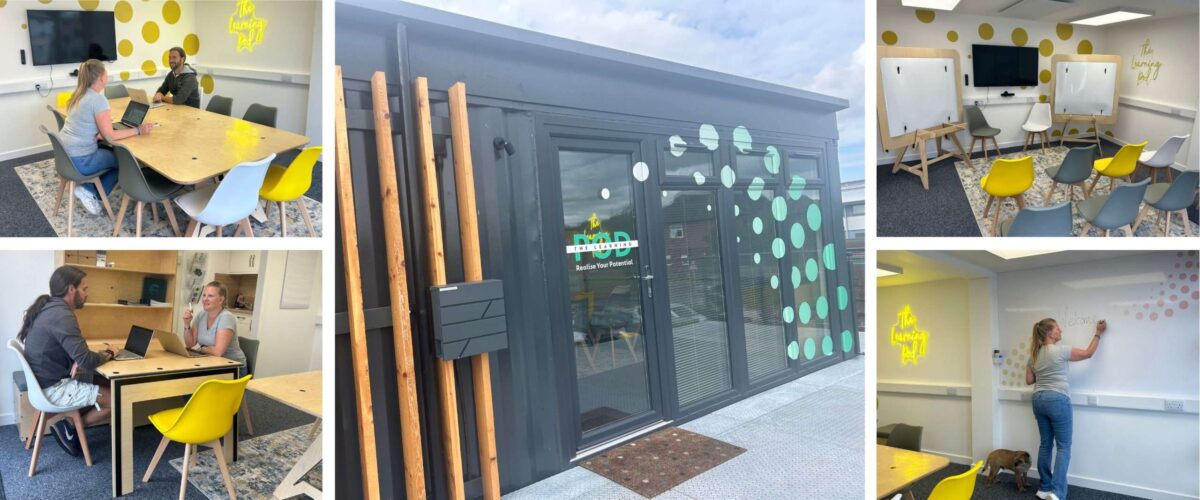
Realise HR are proud to announce the opening of Cumbria’s newest Training facility, ‘The Learning Pod’. Designed with versatility in mind, Realise have created a bespoke, flexible space where people can deliver training or hire the pod out as a meeting facility.

Situated in North Carlisle at Kingmoor Park’s Mod Village, The Learning Pod is not your traditional training facility. It represents a new way of learning with bespoke furniture, writable walls, multiple collaborative spaces which creates an engaging, captivating environment where people can grow, develop and drive innovation back in the workplace.

Realise HR , a multi-disciplinary HR and Recruitment Consultancy, has been a pioneer in the learning and training sector for several years. Their mission is to empower individuals and organisations with a training facility and tools necessary to excel in today’s evolving world.

Claire Mclean, CEO at Realise says “The Learning Pod embodies our commitment to fostering continuous learning and development in Cumbria. Here at Realise, we’re bringing a series of training courses such as Managing People Programmes and HR Business Partner courses to name a few, along with welcoming training providers to host their training programmes in The Learning Pod.  We believe that investing in development is investing in one’s future, and our facility is tailored to empower individuals and organisations on their learning journey. We can’t wait to welcome you!”

Helen Askew, Head of Learning at Realise HR adds “As Head of Learning, this is a dream come true! Our passion is to work with other businesses to bring together a learning environment which is inclusive, informal and collaborative. I am incredibly proud to be part of this exciting new venture and bring a new approach to all things people training in Cumbria.”

To learn more about our upcoming courses, please visit our events page.

Mastering Management: The Key to Business Success in a Competitive Market

Managers play a crucial role in any business and have a significant impact on its success. They serve as a bridge between the organisation’s leadership and its employees, helping to translate strategic goals into actionable plans. Managers also have a key part to play in employee engagement, and if they don’t have the right skills to be able to motivate, communicate, give direction, support and develop their own teams, this will have an impact on your overall business performance.

So, where and how do you start to change some of this? This is a multi-faceted challenge; there are many places to look, analyse and change, however, Rome wasn’t built in a day. Our advice would be to start having open and honest conversations with your managers to truly understand and assess their situation to help them on the road to being a great manager.

Ask some questions:

  • Do they fully understand their role and responsibilities as being a manager?
  • Do they have the tools and resources to perform their jobs effectively?
  • Do they need support and development?

You can’t over-communicate with your managers, and this must be two-way thing. Taking the time to have a meaningful conversation, answer their questions, and allow them to suggest ideas, will definitely increase their workplace happiness which hand in hand helps them succeed at being a great manager and your business to continue with its success.

With that being said… we have an amazing People Management Programme coming up this October, which has been designed to help you develop your people management skills and learn new techniques.

You can find more information on that HERE or if you’d like to chat further on any of the above, please email hello@realisehr.co.uk

How to guide on: Legally employing an apprentice

Are you thinking about employing an apprentice or do you already employ an apprentice? Then this one’s for you!

Having worked with some of the region’s leading training providers, we’re aware that employing an apprentice isn’t always easy and it can be a bit of a minefield making sure that you legally employ apprentices and do everything by the book.

With this in mind, we’ve created a support package (the first of its kind in the UK) on how to legally employ an apprentice and how to get the best from the experience. With the average employment tribunal costing £8,500, we wanted to make sure that employers avoid any costly mistakes, so our package includes everything you need to know such as: how to manage contracts including templates, disciplinaries, grievances, one to ones, absence and more.

If you’re registering your apprentice with one of the local collages this year, you’ll likely hear more about us during the sign up of your apprentice.

Please check out our information booklet here, or if you have any questions or would like to chat further, please email hannah@realisehr.co.uk


Why is Employee Happiness so important?

Health and Wellbeing: Employee happiness is closely linked to their overall wellbeing and mental health. When employees feel satisfied and fulfilled in their work, it can positively impact their mental and physical health

Retention and Loyalty: When employees are happy, they are more likely to stay with an organisation for a longer duration. High employee turnover can be costly and disruptive to businesses, resulting in the loss of valuable talent

Collaboration and Teamwork: Happy employees are more likely to collaborate effectively and work well in teams. They tend to have better relationships with their colleagues, communicate more openly, and contribute positively to a cooperative work environment

Stay Engaged: Happy employees are more likely to engage in the wider business and not just within their silo which benefits both the employee and the business

Customer Satisfaction: Being happy at work will have a direct impact on customer satisfaction. When employees are happy and engaged, they are more likely to provide exceptional customer service, go the extra mile, and build positive relationships with customers. Satisfied customers, in turn, lead to customer loyalty, repeat business, and positive word-of-mouth referrals

By prioritising employee happiness, organisations create a virtuous cycle that benefits both employees and the overall success of the business. It fosters a positive work environment, enhances wellbeing, and contributes to performance and growth. And lets not forget… what’s more infectious than a smiley happy face?!

If you’d like to learn more about how you can create a happier workforce, pop us an email at hello@realisehr.co.uk

Employment Law Update – How to make reasonable adjustments for mental health conditions in the workplace

The latest Employment Law Update by ACAS looks at new guidance on how to make reasonable adjustments for mental health conditions in the workplace.

Studies show approximately 1 in 4 people in the UK will experience a mental health problem each year and is an increasingly recognised issue. Why does this matter in the workplace? Data shows that 17.5 million working days were lost last year in the UK due to mental health related absences.

ACAS has published guidance on making reasonable adjustments in aims to foster a more inclusive and supportive work environment and help combat the huge rise in sick days due to poor mental health. Making mental health adjustments at work involves creating a supportive environment that accommodates the needs of employees with mental health conditions. Some key considerations for implementing such adjustments are:

  • Raise awareness and reduce Stigma: Promote awareness and education about mental health conditions in the workplace to foster understanding and reduce stigma. Encourage open conversations and create a culture of acceptance and support.
  • Flexible working arrangements. Allow for flexible schedules, part-time work, remote work or adjustments to start and finish time where you can.
  • Modifications to work environment: Create a calm space, adjust lighting or noise levels during periods of increased stress.
  • Communication and confidentiality: Establish clear channels of communication for employees to discuss their mental health needs in a confidential and supportive manner. Ensure that managers and supervisors are trained to handle these conversations with sensitivity.
  • Return to work support: When an employee is returning to work after a mental health related absence, provide a supportive transition plan. This could involve gradually reintegrating the employee, providing additional support and considering their workload.
  • Promote a balance: Encourage a healthy work life balance by promoting boundaries, discouraging excessive overtime and fostering a culture that values employee wellbeing.
  • Monitor and review: Regularly monitor the effectiveness of the mental health adjustments implemented and make adjustments as needed. Seek feedback from employees to ensure the accommodations are meeting their needs.

Remember! Everyone’s needs may vary, and it is essential to approach mental health adjustments on a case-by-case basis. Consulting with a company like ourselves can provide further guidance tailored to your specific workplace and needs.

Pop us an email at hello@realisehr.co.uk to chat further.

Boomerang Employees

Text message. It’s the ex.

Heart’s pounding.

They want to talk.

What do we do?

Businesses are having to ask themselves this very question in 2023 amidst a wave of “boomerang employees”. The term, coined by global recruitment consultancy Robert Walters, refers to those wishing to return to their former employers and explore opportunities within their old stomping grounds.

At the back end of the pandemic, businesses struggled to retain staff as employees re-evaluated what they wanted from their working lives. After 2 (long) years of disruption, home schooling and Microsoft Teams, many within the workforce felt burnt out and were ready for a change. This was the catalyst for what became known as ‘The Great Resignation’ with record numbers of employees leaving their jobs in search of roles providing more balanced post-pandemic lifestyles. However, according to Robert Walters, we are now seeing the first signs of the ‘The Great Regret’ with nearly three quarters of professionals hoping to return to their pre-Covid employer.

So, do we delete the message and hit the block button? Or do we think of boomerang hires strategically and incorporate into our talent acquisition strategies? While it’s understandable that managers may be reluctant to hire former employees, there can be many reasons why a former colleague might look to re-join an organisation and many benefits of them doing so. We shouldn’t shun them for having found out that, perhaps, the grass isn’t always greener, and instead should support their return to the business as well as looking to build on foundations that might inspire others to do the same. Boomerang employees are:

The holy grail in terms of ‘bang for buck’

Rehiring old employees can increase productivity and reduce training costs. Providing that they were a valuable team member the first time around, you should expect more of the same, but with additional insight and experience that comes from having been exposed to other cultures, working practices and models.

Good for morale

Not only does rehiring employees allow former colleagues to pick up where they left off, but it also demonstrates that you’ve a positive and nurturing culture, welcoming back those who make a positive contribution to the business. More, returning staff help with retention as they show current colleagues that they’re part of a great team – why go anywhere else?

Helping minimise recruitment costs

82% of those surveyed by Robert Walters stated that they had kept in touch with their former managers with a quarter of these respondents admitting that they’d reached out in the past year for job opportunities. Keeping up relationships with former hires as they progress through their career helps you to build future talent pipelines. In effect, your managers can become your talent acquisition team with eyes and ears in the market watching out for potential moves.

Interested in culture

In response to the ‘The Great Resignation’, employers scrambled to offer higher salaries and make their roles ultra-flexible in efforts to attract and retain staff. While it’s still important to be competitive and have adult conversations about flexibility, the ‘boomerang employee’ has shown us that these components, ultimately, aren’t the be all and end all when it comes to retention. As important, is the culture within your organisation and being proactive about building and reinforcing this culture.

So, getting back with your ex might not be such a bad thing. In fact, used correctly, boomerangs might keep you topped up with experienced talent year after year.

Disclaimer: I’m not recommending that you get back with your actual ex. You’re right, they were probably crazy.

Until next time.


Leadership: It’s the small things that make the biggest difference

Check out our top tips on leadership:

  • Be a good listener and create a safe space for people to have a voice. You want your team to be able to confide in you, offer ideas and support each other. Good listeners develop social and professional relationships on a much deeper level.
  • Display the qualities you want to see in your employees, people love to be inspired.
  • Motivate your employees to improve. Whether it be creating paths for growth or offering incentives, there’s many ways to motivate your team.
  • Create a positive workplace culture. Work culture can affect the overall happiness and growth of your employees. Some quick wins could be: Being that bit more flexible, listening to feedback and actually asking for it, encourage socialising whether it be taking a lunch break together or having a meal after work, this can really help connect on a different level.

Over 50s Working

Most employers understand the importance of having a diverse workforce. However, hiring managers can unconsciously favour younger candidates able to show how their skills are a match for modern and technology-focused working. According to research conducted by the Chartered Management Institute, while 74% of managers are open to employing those between the ages of 18-34, this number drops dramatically to only 42% actively interested in the 50-64 demographic. With significant skills and labour shortages across all sectors, it seems paradoxical that businesses would be hesitant about recruiting older workers (especially considering potential age discrimination claims) and yet easy to appreciate how employers may struggle to balance cross-generational working. While investment in government programmes such as returnerships should help provide more mature candidates with pathways into work, businesses need to seriously think about age diversity and what initiatives they have in place to attract and retain older workers. With age comes experience, and we need to harness the value of life-long learning and the impact that this can make within a business and within our teams. So, how do we do this?

Enhance flexible working opportunities

As we age, there are natural changes within our bodies that may affect the ways and patterns in which we work. Where once we may have been happy with a fast paced 8-hour shift, we might find this slightly less comfortable later in life. Similarly, as many of us take up new roles as grandparents or carers, it can often be challenging to juggle work/life commitments, especially if we’re also managing health conditions of our own. The solution? Rethink shift patterns and the deployment of staff to help retain more experienced workers.

Dedicated recruitment campaigns for older workers

I bet you know your ideal customer. Your marketing team might even have customer personas for each of your product lines or divisions. However, recruitment advertising is often given a lot less thought, with listings hastily posted on Indeed hoping they hit the mark. Safe to say, one size doesn’t fit all. Using neutral, non-biased language is inclusive in as much as it won’t turn anyone off, but it also doesn’t help you to engage groups that are perhaps underrepresented within your workforce. It’s important to think about language, tone, and imagery, as well as content related to the role, responsibilities, and benefits. You must put yourself in the shoes of the person you want to attract.

Don’t make assumptions

“She’s worked here for 20 years; she won’t be interested in training”. Is this reality or assumption? Have we asked the question? It’s not only younger colleagues who appreciate the opportunity for upskilling and further development. Moreover, older workers are often conscious of being less familiar with the new technologies and processes coming into our businesses. Inevitably, this can push people closer to the door, so we need to be on top of skills development and have clear progression pathways for all the members of our teams.

Support for health and wellbeing

According to the Chartered Institute of Personnel and Development, more than half of workers have a long-term health condition by the time they reach 60. This accounts for more than 15 million people in the UK. Generally speaking, the key to long-term support for health and wellbeing is in leading with compassion. Are your managers providing an environment where team members feel supported enough to come forward and talk about the things they’re dealing with? Is absence managed in a caring and supportive way? While different conditions will need different levels of support, it’s important to get the guiding principles in place. This is what we’re helping businesses with, day-in day-out.

Complete to Download

Please provide your details to access this file.